


AI and the insurance broker disintermediation debate


AI looks set to accelerate the decline of traditional distribution for commoditised risk but stands as a tailwind for the augmented commercial insurance brokers of the future and the specialty underwriters in which we invest.
- We expect AI and technology innovation to further the performance gap between the best and worst insurers. We believe it will be a tailwind to the Polar Capital Global Insurance Fund’s long-standing focus on commercial specialty underwriters that focus on complex, hard-to-place risks.
- To us, current broad AI insurance broker distribution disintermediation concerns appear misplaced in commercial markets. Commercial brokers provide a broad range of services and play a critical role in helping clients navigate the Age of Risk which is only enhanced by AI.
- Most personal lines insurance continues to migrate away from brokers to the most convenient, transparent, digital and cost-effective channels. Direct-to-consumer markets continue to grow. Frontier models offer another medium for individuals to easily buy insurance, further accelerating the move to direct distribution that started decades ago.
- We estimate the ongoing ‘Disintermediation Debate’ impacts less than 5% of the Fund.
The future of insurance distribution is something investors and analysts have again questioned in recent months as new AI innovations show the potential to disrupt many legacy business models across the economy. As long-term investors in the insurance business, technological innovation and value chain disintermediation are topics we have long considered as part of our investment process. We are cognisant of the significant impact of innovation and disruption having witnessed it first hand in many markets in which we invest. For the past decade we have tried to ensure we can ‘look round corners’ as best we can by spending time with start-ups, innovators, chief digital officers and venture investors in the industry.
US following UK’s personal lines digital path?
We believe consumers of personal insurance products will continue to demand more transparent, digital and comparative mediums through which to buy their insurance. Digital sales are therefore rising strongly and this will only accelerate further as new generations of digital and AI-savvy people enter the workforce. We still detect some cultural resistance to the idea of personal insurance brokerage disruption in the US and European markets. However, to our minds, the direction of travel and the growth of the direct-to-consumer channel suggests the more homogenous and commoditised end of US and European personal insurance markets will head in a similar direction to that seen in the UK.
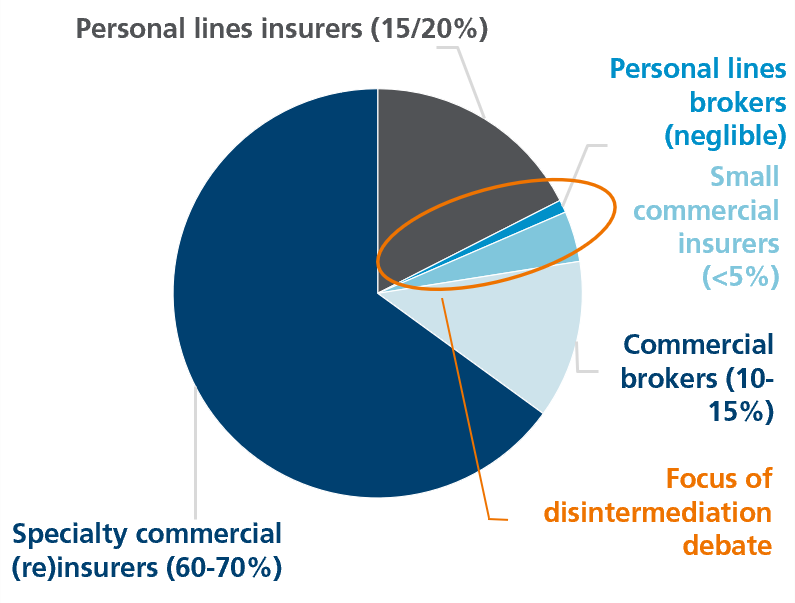
In the US in particular these products are typically written by the main street insurers where the lowest price usually wins and regulators closely scrutinise prices with the aim of protecting the consumer (and voter). That is not typically a recipe for strong sustainable underwriting margins. The uncertainty around, for example, the impact of autonomous vehicles on auto insurance further muddies the investment case for personal lines-focused insurers over the long term. As a result of these headwinds, the Fund has structurally always had limited exposure to personal insurance with a long-term weighting of 15-20% of look-through premiums (see chart below) which is in stark contrast to the industry where auto and home insurance represent around half of global non-insurance premiums. Our relatively modest personal lines exposure is concentrated in more niche risks such as classic and performance car insurance (Hagerty) and high net worth homeowners’ insurance (Chubb and Hiscox) where specialisation is essential to long-term success. Other holdings such as Progressive have successfully ridden the wave of disruption by pioneering the direct-to-consumer model in the US market.
| Fund exposure (by look-through premiums) | |
| |
| Source: Polar Capital, March 2026. |
AI’s positive impact on commercial and specialty insurance
The Fund’s predominant focus remains commercial and specialty underwriting risks which are more complex and often require multiple insurers to place. We also have a long-standing weighting of 10-15% in insurance brokers whose businesses are similarly very skewed to commercial and specialty insurance. Our sense, from talking to market participants and watching insurance distribution evolve over the past three decades, is that the impact of AI on underwriters and intermediaries for complex commercial risk is fundamentally positive, a very different backdrop to the personal lines market.
Case Study: Disruption in the UK personal lines market
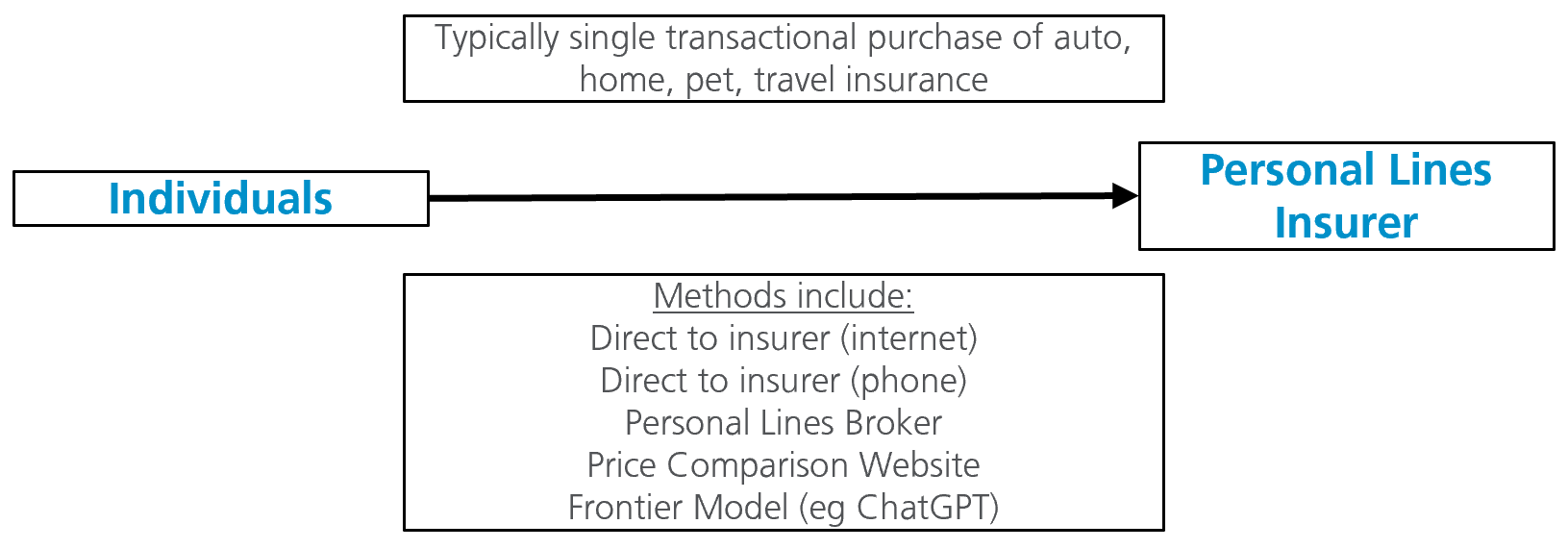
The UK insurance market is an interesting test case with regard to disruption in personal lines insurance distribution. Historically, innovation has moved at pace in this very competitive market, in part reflecting the persistency of a more market-oriented, principles-based regulatory environment. One of the earlier challenges at disrupting personal insurance brokers came from Direct Line which was founded in 1985 as the first telephone-only insurance company. Subsequently, with the growth of the internet in the late 1990s the digital purchasing of insurance by consumers accelerated and cumulated in the founding of price comparison websites (PCWs) such as Confused.com in 2001.
However, it then took nearly a decade for PCWs to reach even a quarter of new business sales while personal insurance brokers retained a foothold in the market. In the decade that followed, PCWs almost completely disrupted brokers out of the market and today 90% of UK individuals shop for policies on PCWs. The vast majority of personal lines insurance purchased by individuals are transactional, which means only the most nimble, digital first and efficient underwriters are able to thrive in such an environment.
 |
Personal brokers do still exist in the UK. If you have a valuable art collection, a grade I listed house, are trying to extend your property or have a classic car collection your insurance options will be more limited given that your risk profile is likely to fall out of the underwriting appetite of main street insurers. Those buyers need the specialist knowledge and underwriting access offered by an intermediary who can advise on exactly what insurances are required.
Brokers use multiple platforms as well as niche facilities such as managing general agents (MGAs) to ensure such risks are placed at an acceptable price with an insurer who will respond quickly should the buyer need to make a claim. Complex and bespoke risks are often hard to place given fewer insurers specialise in these areas and underwriter appetite can vary, resulting in such risks often ending up in specialty markets such as Lloyd’s of London. The demand for specialty insurance solutions continues to expand strongly with Lloyd’s of London in particular seeing strong growth supported further by the establishment of new syndicates. Increasing its presence in specialty risk was a key rationale for Zurich Insurance Group’s recent successful bid for Beazley.
US reluctant to follow the ‘price comparison website’ model
Turning to the US market, it is interesting to see the price comparison model has not gained a foothold in the same way as in the UK. This is not through lack of trying. There are several ‘comparator raters’ (the US PCW equivalent) with the agencies/brokers sitting at the epicentre, in contrast to other markets where PCWs have helped replace the role of the broker. Consumers remain wary of the multitude of risks they face in the US, from litigation to climate risk such as wildfires or flooding risks which are typically not covered under standard policies. When you combine this with the additional catastrophe risks from hurricanes to earthquakes and a historic preference for bundling personal lines coverages, it is evident why the market has been reluctant to move wholesale away from the broker as we have seen in other geographies. In addition, state-by-state regulation impedes some of the scale benefits seen elsewhere as each US state operates within its own legal and regulatory framework, localising insurance pricing. Effectively the US personal lines market is best thought of as 50 smaller markets rather than a nationwide one. We have felt for some time that despite these challenges technology could help overcome some of these structural barriers and accelerate the adoption of direct, embedded and point of sale covers in the US to the potential detriment of the personal lines broker or agent. We have exposure to this through our investments in Progressive and GEICO (owned by Berkshire Hathaway) which are the two leading direct insurers in the US. Both continue to take share from smaller, less sophisticated insurers and mutuals who together are facing ever greater risks of anti-selection.
Despite their strong direct distribution offering, Progressive and, in the past few years GEICO, have become strong adopters of the agent/broker channel as well. This gives them better access to the preferred, mid- to upper mid-market customers who often have higher premium insurance requirements, frequently require advice and as a result tend to be stickier and more profitable than those with simpler needs such as renters or first-homeowners who are more likely to shop around every year. Preferred customers tend to require more bespoke and packaged services which, as noted earlier, can fall out of the main market’s risk appetite whether it is a condo in Florida, a classic car in the Mid-West or a pleasure boat in New Orleans.
When it comes to ChatGPT or any other frontier model acting as a conduit we view this as simply an alternative distribution channel that is equally available to both start-ups and industry incumbents and may better help consumers compare coverages and reviews across providers. This may further accelerate the trend to strong brands and more direct-to-consumer purchasing which, if this is the case, we believe we are well placed with our market-leading direct distribution underwriters holdings such as Progressive. Insurance is a trust business that sells a promise to pay so consumers, no matter which method they use to purchase insurance, will want to do so with an insurance company they know and believe at the end of the day will pay their claim.
Commercial brokers play critical role in placing large and complex commercial risks
Turning to commercial insurance brokers which have been caught in some of the crossfire of the ‘disintermediation debate’, these companies operate at the other end of the risk spectrum, dealing with large premiums and challenging, hard-to-place complex risks. They range from the large global brokers such as Marsh and Aon who dominate Fortune 1000- type risk placements and reinsurance to wholesale risk brokers such as Ryan Specialty Group Holdings and Amwins who help retail brokers secure cover for hard-to-place and complex risk. Then there are the mid-market-focused brokers such as Brown & Brown and Arthur J Gallagher* whose distribution model touches almost every town in America and primarily operate from the layer above those clients with simple insurance needs that are currently already able to go direct to insurers. The industry then has a long tail of small ‘mom and pop’ agents/brokers that number in the tens of thousands, whose focus is much more at the commoditised end of the risk spectrum.
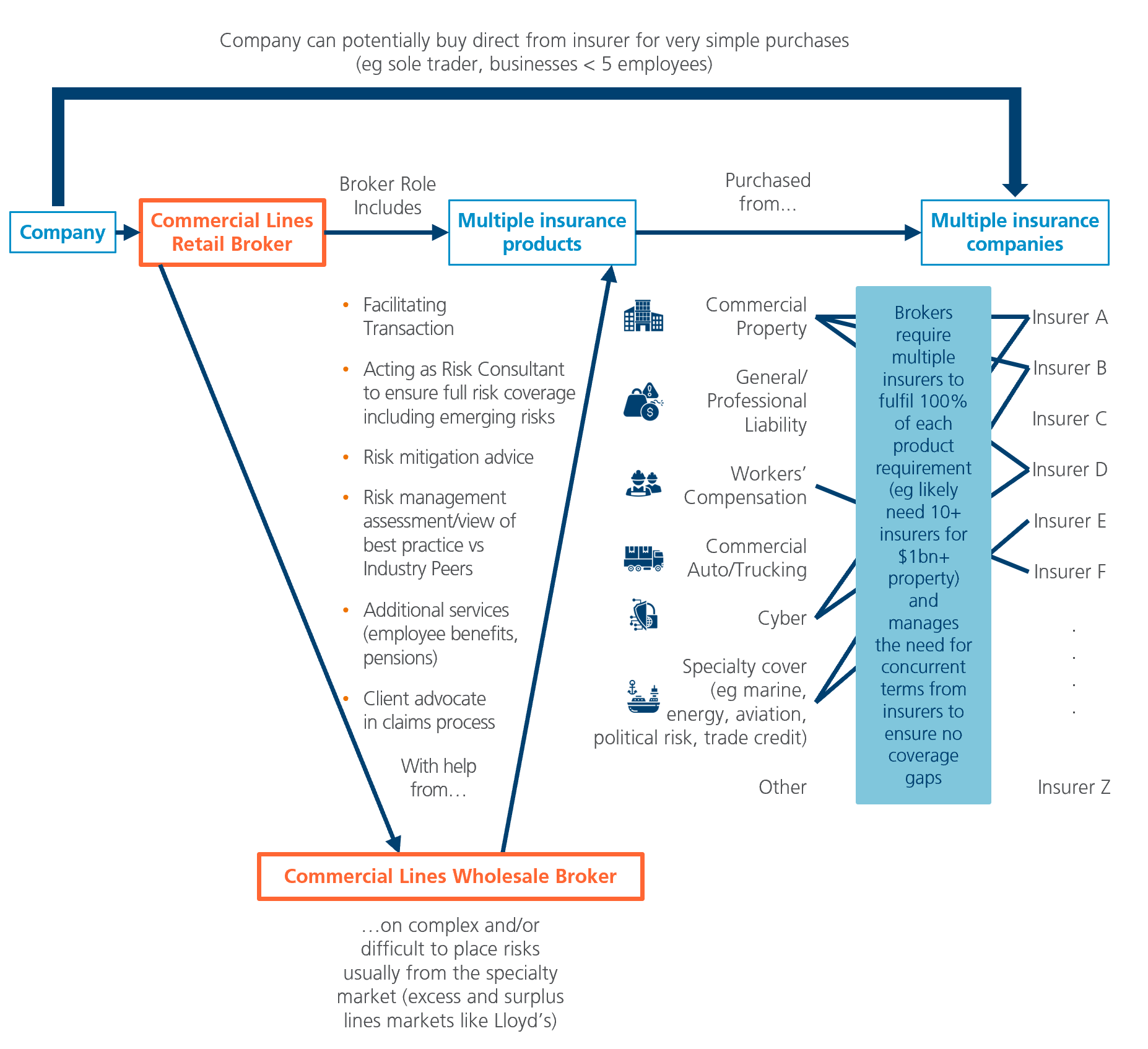
Today, insurance brokers primarily act as risk advisers to businesses whose complex needs are not easily solved. Larger companies will have their own teams of risk advisers but many medium-size businesses do not. As a result, given the complexity arising out of the need for a multiplicity of insurance coverages, the ever-changing risk and regulatory backdrop and the sheer complexity of those placements, particularly if they extend across markets and geographies, many of the insurances that are purchased by commercial buyers require large towers of coverage with multiple underwriters needed to fulfil those placements. The commercial broker plays a critical role in building these towers, and negotiating concurrency in terms and conditions across them. This is very different from personal insurance or small business insurance markets where invariably each product is bought from a single carrier and therefore has the option of whether to choose to go direct or to use a broker.
The US small commercial opportunity
We have noted for some time that there is a substantial opportunity at the smallest end of the commercial market for Fund holdings, whether from sole traders or companies with a handful of employees where business owners need only one or two insurance protections. These consumers increasingly look to buy direct and Fund holdings such as Chubb, Progressive and Hiscox have been significant beneficiaries of this trend with strong franchises in this part of the market. However, the pace of market adoption of commercial buyers going direct has been slower than many of our underwriters had anticipated. For instance, Travelers bought Simply Business, a digital, UK-based small business insurance platform, in 2017 with the intention of replicating its model in the US but has been surprised at the slower pace of adoption in the US market.
It will be interesting to see if frontier models can help accelerate this trend further, as we expect to be the case in personal lines. The brokers who currently meet the needs of these small and microbusiness owners will need to adapt to survive, either by taking on more complex risk or investing in technology capabilities, and those that cannot do so will likely either fall by the wayside or be consolidated.
Listed brokers focus primarily on complex and specialty risk
The business of listed insurance brokers, whose global reach and breadth of capabilities mean they primarily focus on more complex and specialty risk, is substantially different. The following illustration gives a sense of the commercial insurance buying value chain, with the complexity of placements rising rapidly even for modestly sized businesses which is being further accelerated by the rising risk environment.
 |
| Source: Polar Capital, March 2026. |
Brokers engage with the client in a sales and service role as well as with underwriters to help them build attractive portfolios of risk. This is in sharp contrast to the personal lines insurance value chain which is much more transactional. While AI is leading to these roles evolving in what one underwriter described recently as “the most exciting thing that has ever happened to insurance companies”, underwriters value the role of the brokers in managing the client relationship which leaves them to focus on pricing and underwriting the risk and building portfolios of covers. The global risk backdrop is fast-paced and continually evolving, especially as we transition to a more digital economy.
New risks continue to emerge, whether because of technological innovation or regulations and environmental standards and as a result brokers are constantly seeking to innovate to bring coverage to market in order to help their clients meet their needs. Brokers have become adept at leveraging specialist underwriting facilities or alternative capital to support placements and expand their ability to provide coverage. However, as noted above, we live in an Age of Risk where the risk backdrop is becoming even more challenging and fast moving, whether it is from political uncertainty, regulatory change, litigation, war, technology disruption, climate change or cyber risks. This creates challenges for businesses and adds to the value brokers provide in helping companies understand and manage downside risk.
Growing complexity requires more specialist niche risk solutions that are best provided by the specialty underwriters that dominate our portfolio. Today’s businesses need, more than ever, to gain advice, to ensure they understand the breadth and depth of the growing risks they face and then obtain appropriate coverage from providers who at the end of the day will be there to pay their claim when they need it most. Middle market clients also gain significant benefit from their broker relationship during the claims process. Given their importance to underwriters, brokers carry more weight in negotiating claims on behalf of these clients than the clients would be able to do on their own.
Technology is not the only thing accelerating in an Age of Risk
Technological innovation is only accelerating, which further adds to the uncertainty that comes from a changing and rising risk environment. Technological advances do not remove risk; they arguably increase the quantum of risk. As clients and brokers become more sophisticated in their use of AI, so will their understanding of the ever-increasing risk environment which can help address the significant level of underinsurance across the economy today. AI will help accelerate an already improving understanding of risk in today’s boardrooms that has come from ESG and other reporting regimes which are already shining a brighter light on the risks companies face. Brokers are heavily investing in AI-driven solutions for clients given the extent of their proprietary data and insight and we expect these capabilities to increase demand for products and services in the future, driving new avenues for organic revenue growth that better meet client needs and in turn help grow the overall pie of insurable risks. This will help decrease the ‘protection gap’ between insured risk and economic risk, increasing the insurance industry’s importance in being a first responder when bad things happen. Growing insurance premiums benefit the entire insurance industry – as one market participant notes, “there is a bull market in risk advice”.
AI capabilities 'augment' insurance brokerage
We believe insurance brokers remain highly defensive businesses given their largely recurring revenue streams arising from insurance policies that are renewed annually. For as long as risk goes up (something we think everyone sadly agrees on) so will the demand for their services which encompass all facets of the risk process, from structuring to placing the risk and then finally being an advocate for clients in the event of claims. Annual margin expansion has been a feature of the broking industry for many years, and we think AI should continue to accelerate broker productivity and continue to drive profit margins upwards over time.
On 17 March, in its quarterly Investor Relations day Arthur J Gallagher* gave an indication of the scope of potential cost savings from AI initiatives that it thinks can be realised over the next 3-5 years. The company envisages 5% savings in the production layer (20% of revenue), 10-15% in the support layer (15% of revenue) and 20-30% of back-office costs (15% of revenue). Combined, this would be around 600bps of aggregate savings. The brokers’ capital-light business models mean little, if any, capital is required to fund growth which means an increasing amount of profit and free cashflow will be available for dividends, M&A and share repurchases, further compounding shareholder value. As noted above, smaller unlisted brokers who do not have the resources to fully invest in AI capabilities will either provide attractive consolidation opportunities for Fund holdings or will find themselves falling by the wayside.
Insurance brokers faced challenging organic growth comparatives in 2025 given a slowing of non-life insurance pricing and a normalisation of the economic growth environment. However, listed companies are still guiding to organic growth around mid-single digits for 2026 which remains attractive in a historical context. When combined with prudent assumptions on M&A and share repurchase this should continue to lead to double digit adjusted earnings per share growth over time. Broker valuations have dropped significantly in recent months and now stand at a 10-year low.
AI a positive tailwind to commercial insurance brokers and the Fund
In summary, we believe the insurance broker model is not broken – arguably the opposite – with AI supporting enhanced coverage, data and analytics and cost savings that will expand both growth and margins. We have spoken to our three broker holdings’ management teams in recent weeks and a significant number of our underwriter holdings as well as many others at the AIFA conference in early March. We got a clear message irrespective of who we spoke to, best summarised by Ryan Speciality Group Holdings' CEO Pat Ryan: “AI is an ally, not an adversary”.
We will remain vigilant to the evolving nature of AI capabilities and our companies’ abilities to capitalise on these and will react if legacy business models do come under threat in years to come. However, with respect to the commercial insurance brokers, we view their recent price weakness as overdone and we have not been idle. We came into the year with our broker weighting at the lower end of our 10-15% range given the stronger returns we expected in the underwriters combined with our anticipation of tougher organic growth comparatives. This has positioned us well to take advantage of what we believe is Mr Market’s short termism and a misunderstanding of the broker’s role in the value chain. Furthermore, we are well aligned with management teams who have been initiating new buyback programmes and topping up their own personal holdings. We will continue to add to our broker holdings as long as the current valuation opportunity exists.
* not held